Hot and Cold: The Ancient Recovery Trick That Modern Science Finally Proved Right
Somewhere along the way, the wellness industry figured out that if you slap a price tag on something ancient, people will pay it. Cold plunge tubs run $3,000 to $8,000. Infrared sauna sessions at boutique studios cost $40 to $60 a pop. Contrast therapy packages at recovery centers — the kind where you alternate between a hot room and a cold tank — can run north of $100 for 45 minutes.
And here's what those places will never tell you: the physiological mechanism they're selling is available in your bathroom, right now, for free.
Temperature therapy isn't new. It isn't even close to new. Scandinavian cultures have been cycling between saunas and frozen lakes for centuries. Roman bathhouses were structured around thermal contrast. Traditional Japanese practices like misogi — ritual cold water immersion — predate modern sports science by more than a thousand years. What's new is the peer-reviewed literature that's finally caught up to what people figured out through experience long ago.
What's Actually Happening in Your Body
Temperature is a powerful physiological lever, and the effects of both heat and cold exposure are well-documented enough at this point that dismissing them as wellness hype requires willful ignorance.
Cold exposure triggers vasoconstriction — your blood vessels narrow, pushing blood toward your core organs and away from the extremities. Your body simultaneously releases norepinephrine, a neurotransmitter and hormone that plays a key role in alertness, focus, and mood regulation. A 2022 study published in PLOS ONE found that even short cold water immersion (11–15 minutes per week total) produced significant increases in norepinephrine — up to 300% in some participants. That's not a supplement-level effect. That's a serious physiological shift.
Cold exposure also reduces delayed-onset muscle soreness (DOMS), accelerates clearance of metabolic waste from muscle tissue, and has been studied for its effects on brown adipose tissue activation — the kind of fat that actually generates heat and burns calories.
Heat exposure works the complementary side of the equation. Vasodilation opens up blood vessels, improving circulation and nutrient delivery to muscle tissue. Heat stress triggers the release of heat shock proteins, which help repair cellular damage and support protein synthesis. Regular sauna use has been associated in Finnish population studies with significantly reduced risk of cardiovascular events — including a study from the University of Eastern Finland showing that men who used a sauna four to seven times per week had a 63% lower risk of sudden cardiac death compared to once-a-week users.
Contrast therapy — alternating between hot and cold — creates what researchers describe as a vascular pumping effect. The repeated cycles of constriction and dilation essentially act like a circulatory workout, improving vascular tone and accelerating recovery from exercise.
Your Shower Is Already the Tool
You don't need a plunge pool. You don't need a sauna membership. You need a shower with hot and cold settings, which you almost certainly already have.
Here's a practical protocol you can start tonight:
The Basic Contrast Shower
End your normal shower with a temperature switch. Start with two minutes of water as cold as you can reasonably tolerate — not painfully cold, but genuinely uncomfortable. Then switch back to warm for two minutes. Repeat the cycle two to three times, always ending on cold.
Total time added to your shower: six to ten minutes. Total additional cost: zero.
The cold-ending protocol matters. Finishing cold keeps norepinephrine elevated longer and avoids the post-shower drowsiness that some people experience when ending on heat.
The Morning Reset Protocol
If full contrast feels like too much first thing in the morning, try a 30-to-90-second cold blast at the very end of your shower. Research from the Netherlands — specifically a randomized controlled trial involving 3,000 participants — found that people who ended their showers with 30 to 90 seconds of cold water reported significantly less sick leave from work and felt more energetic during the day. The cold group didn't get sick less often, but they recovered faster and felt better when they did get sick.
That's a meaningful finding for a habit that costs nothing.
Seasonal Adjustments
If you live somewhere with actual winters — the Midwest, the Northeast, the Mountain West — you have access to natural cold exposure that people in California pay for. A ten-minute outdoor walk in sub-40°F weather without a heavy coat is a legitimate cold exposure stimulus. Swimming in a lake or river during shoulder seasons (spring and fall) achieves the same effect. You don't have to be reckless about it. You just have to stop treating cold as something to avoid.
In summer, the heat side of the equation becomes more accessible. Extended time in a hot car, a hot tub, or simply exercising outdoors in high heat — when done safely and with appropriate hydration — provides heat stress benefits without a sauna membership.
A Note on Hair Health
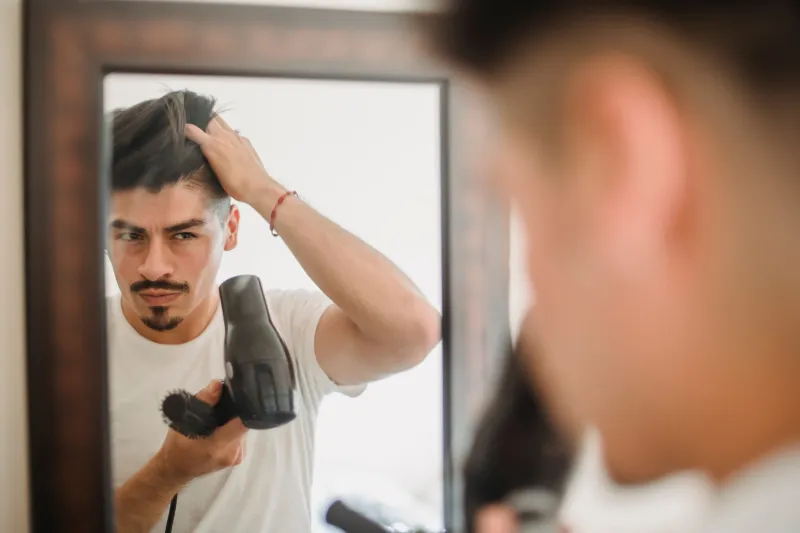
This is worth mentioning specifically: cold water applied to the scalp causes vasoconstriction followed by a rebound vasodilation that increases blood flow to the hair follicles. While the research on this as a standalone hair loss intervention is limited, improved scalp circulation is consistently cited as a supporting factor in follicle health — and it costs you nothing to add 30 seconds of cold water to your scalp at the end of your shower. Given that poor scalp circulation is one of the contributing factors discussed in discussions of androgenic alopecia, it's a low-effort addition to any hair health routine.
What to Realistically Expect
Temperature therapy isn't magic, and it isn't going to replace sleep, nutrition, or actual exercise. But as a recovery accelerant and a daily physiological reset, it delivers measurable effects that are well-supported by research — and it does so without a subscription, a cancellation policy, or a waiting room.
Start with the contrast shower. Do it consistently for two weeks. Pay attention to how your recovery feels, how alert you are in the mornings, and how your muscles respond after hard training days.
Your ancestors didn't have the peer-reviewed literature. They had rivers, fires, and the practical wisdom to put them together. Turns out they were onto something.