Enough Already: Why American Men Are Walking Away From Online Health Subscriptions
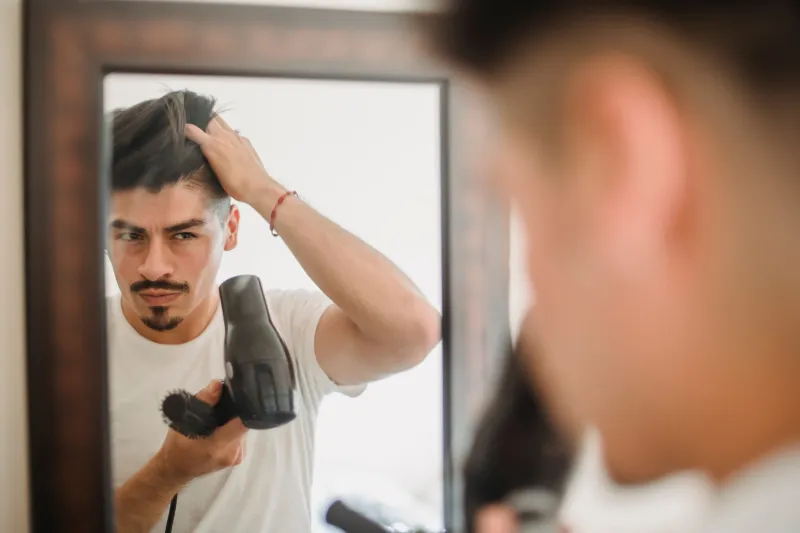
Somewhere around month four of his hair loss subscription, Marcus — a 34-year-old project manager from Columbus, Ohio — realized he had no idea what he was actually taking.
He'd signed up after a late-night scroll through an ad that made the process look frictionless. Answer a few questions, get a "physician-reviewed" plan, receive a box. Simple. But when he tried to pause his subscription before a vacation, he found himself in a maze of customer service emails. When he asked his actual doctor about the medication, she raised an eyebrow. And when he did the math, he'd spent over $400 in four months on something he could have researched himself.
"I didn't feel like a patient," he told a friend. "I felt like a subscriber."
Marcus isn't alone. Across Reddit threads, consumer review sites, and informal conversations, a growing number of American men are expressing the same thing: they signed up for convenience and got something that felt more like a trap.
The Promise vs. The Reality
The pitch from digital health platforms has always been seductive. Skip the waiting room. Get treated from your couch. Men's health, made easy.
And to be fair, these platforms did something genuinely useful when they launched — they lowered the barrier for men who would never have walked into a doctor's office to talk about hair loss, sexual dysfunction, or low energy. That's not nothing. Stigma is real, and access to care in the US is genuinely uneven.
But somewhere between the promise and the product, something went sideways for a lot of guys.
The complaints cluster around a few consistent themes. First, the subscription model itself — designed with cancellation friction baked in, auto-renewing before you've had a chance to evaluate whether anything is working. Second, the feeling of being handed a treatment plan with minimal actual dialogue. A questionnaire is not a conversation. Third, and maybe most importantly: the sense that the goal of these platforms is retention, not outcomes.
When your health becomes a recurring line item, it changes the dynamic. You stop being a person making informed decisions and start being a customer being managed.
Over-Medicalized and Under-Informed
There's a specific kind of frustration that comes from being handed a prescription you didn't fully understand, for a condition you didn't fully discuss, by a provider you've never met in person.
For something like finasteride — a common hair loss medication with a real and documented side effect profile — the stakes of that information gap are meaningful. Some men report persistent sexual side effects even after stopping the drug, a phenomenon serious enough that the FDA has updated its labeling multiple times. That's not fringe information. It's in the prescribing guidelines.
But when your "consultation" is a five-minute async message exchange optimized for throughput, nuanced conversations about risk tolerance don't always happen.
This isn't an indictment of every telehealth provider. There are legitimate digital health services doing careful, patient-centered work. But the business model of high-volume, subscription-based men's health creates structural incentives that don't always align with what's best for the guy receiving the box.
And men are starting to notice.
The Self-Advocacy Turn
What's interesting about the backlash isn't just the frustration — it's what men are doing instead.
Search trends and community forums show a significant uptick in men researching non-prescription alternatives for the same concerns these platforms target: hair thinning, low energy, stress, sexual wellness. They're asking better questions. They're reading studies. They're comparing ingredients on labels instead of just clicking "subscribe."
This is genuinely good news. Not because prescription medicine is bad — it isn't, and for some conditions it's the right call — but because men engaging critically with their own health is a different posture than men being passively enrolled in a treatment pipeline.
The truth is, for many of the concerns these platforms address, there are legitimate, evidence-backed, non-prescription options worth knowing about. Minoxidil for hair loss is FDA-approved and available at any pharmacy. Certain supplements have real data behind them for energy and stress support. Lifestyle factors — sleep, exercise, nutrition — have a deeper impact on sexual wellness and vitality than most men are told. These aren't consolation prizes for guys who "can't get" a prescription. They're often genuinely effective starting points.
Reclaiming the Driver's Seat
Here's the reframe that's worth sitting with: being your own health advocate doesn't mean refusing medical care. It means approaching your health with the same critical thinking you'd apply to any other major decision.
That looks like a few things in practice:
Ask what you're actually taking and why. Whether it's a prescription from a telehealth provider or an OTC supplement, you should be able to explain the mechanism, the evidence, and the risk profile in plain language. If you can't, that's a gap worth closing.
Understand what's actually driving your symptom. Low energy might be poor sleep, nutritional deficiency, thyroid function, or stress. It might also be something that warrants medical attention. Starting with the basics — a real conversation with a primary care doctor you actually see, a blood panel, an honest look at your lifestyle — gives you a foundation that no questionnaire can replicate.
Know what you can address yourself. A significant portion of early-stage men's health concerns respond meaningfully to non-prescription interventions. That's not wishful thinking — it's what the research shows. The problem is that research doesn't have an ad budget.
Read cancellation policies before you subscribe to anything. This should go without saying, but here we are.
The Bigger Picture
The subscription-based men's health model isn't going away. There's too much money in it, and the convenience is real for the right person in the right situation. But the era of men passively clicking "get started" without reading the fine print or understanding the treatment? That seems to be ending.
And honestly? Good.
Men's health in America has long suffered from a specific kind of neglect — men avoiding care, minimizing symptoms, toughing it out. The telehealth boom tried to solve that problem with convenience. What it sometimes created instead was a different kind of disengagement: men enrolled in treatment they didn't fully choose, paying for outcomes they couldn't evaluate.
The guys walking away from those subscriptions aren't giving up on their health. They're taking it back. They're asking harder questions, looking for better information, and discovering that they have more tools available to them than they were led to believe.
That's not a retreat. That's exactly what informed, self-directed health looks like.
And it starts without a prescription.