Put Down the Credit Card and Pick Up a Hammer: Why Manual Hobbies Are Quietly Crushing Stress Clinics
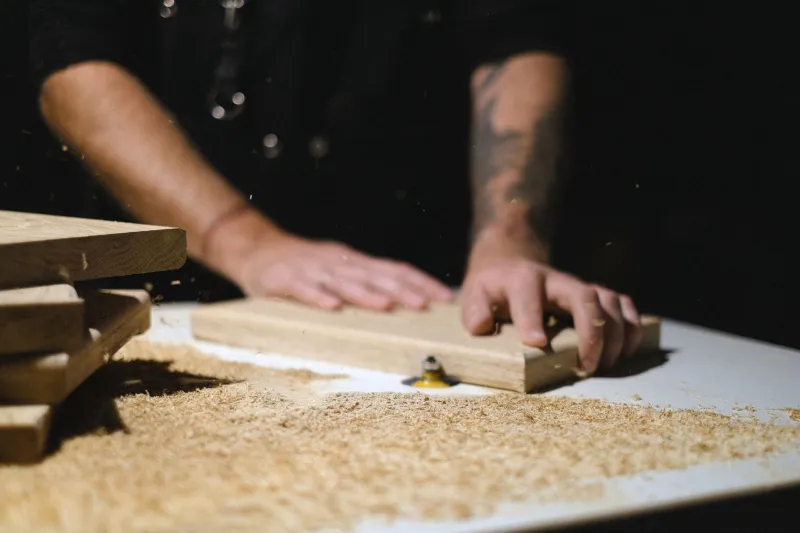
Somewhere between the third upsell email from your men's health subscription and the moment you realized you were paying a separate line item for "stress coaching," a guy down the street quietly fixed his fence, built a raised garden bed, and walked back inside feeling genuinely calm. No copay. No intake form. Just sawdust on his jeans and a measurably better afternoon.
This isn't a fluke. It's biology — and the research behind it is starting to catch up to what a lot of men have sensed for years.
The Science Has a Name for It
Researchers call it the effort-based reward system. The basic idea: your brain is wired to release dopamine not just when you receive something, but specifically when you earn something through physical effort. It's an ancient circuit, probably built for hunting and building and problem-solving in the real world — not optimized for scrolling through telehealth dashboards.
A landmark study out of the University of Virginia found that people who engaged in manual, effort-based tasks reported significantly higher feelings of satisfaction and meaning compared to passive leisure activities. More recently, neuroscientist Kelly Lambert's work on "effort-driven rewards" has shown that hand-and-eye activities — think woodworking, tiling a bathroom, planting seeds — activate the striatum and prefrontal cortex in ways that closely mirror the effects of antidepressants. That's not a metaphor. That's a mechanism.
On the cortisol side, the data is similarly compelling. Hands-on, absorbing tasks pull you into a low-grade flow state that suppresses the hypothalamic-pituitary-adrenal (HPA) axis — the stress highway your body runs on. In plain English: building something with your hands tells your nervous system to stand down.
What a $7 Hardware Store Run Actually Buys You
Here's where the math gets interesting. The behavioral health add-ons now bundled into men's health subscriptions can run anywhere from $30 to $150 per month, depending on the platform. What you're typically getting is access to a library of guided meditations, maybe an async check-in with a coach, and a lot of app notifications reminding you to breathe.
Contrast that with a $7 hardware store trip. For that, you can walk out with:
- A small bag of wood screws and a sanding block — enough to start fixing that wobbly shelf that's been annoying you for eight months
- A packet of vegetable seeds and a cheap trowel — the entry point to container gardening, which has its own robust body of stress-reduction research
- Sandpaper in three grits — all you need to start refinishing something small, like a cutting board or a stool
None of these require skill. None require a subscription. And all of them give your hands something real to do.
Why Men Specifically Benefit From This
There's a cultural layer here worth naming. A lot of men find traditional stress-management frameworks — journaling, talk therapy, mindfulness apps — genuinely useful, but a lot of others bounce off them hard. Not because those tools don't work, but because they don't match how many men actually process stress: through action, through problems, through the satisfaction of a visible outcome.
Fixing a leaky faucet gives you a before and an after. Sanding and staining a piece of wood gives you a thing you made with your hands. Pulling weeds and watching something grow gives you a feedback loop that's slow and grounding in the best possible way. These aren't inferior substitutes for "real" mental wellness work. For a lot of men, they're the real thing.
Anthropologists who study male bonding and stress behavior have noted for decades that men tend to regulate emotionally through doing rather than talking. The hardware store hobby trend isn't a retreat from self-care. It might actually be a more authentic version of it.
Getting Started Without Overthinking It
The barrier to entry here is genuinely low — which is kind of the point. You don't need a workshop. You don't need to watch forty YouTube tutorials before you're allowed to start. Here are three real entry points that cost almost nothing:
1. The One-Project Rule Pick one broken or unfinished thing in your home and commit to fixing it this weekend. A loose cabinet hinge. A door that doesn't close right. A section of fence that's been leaning since last spring. Go to the hardware store, spend under $10, and fix the thing. That's it. Notice how you feel afterward.
2. Container Gardening on a Budget You can start a container herb garden for under $15 total — a few small pots, a bag of potting mix, and a couple of seed packets. Basil, cilantro, and mint are nearly impossible to kill. Tending plants, even briefly, has been shown in multiple studies to lower cortisol and blood pressure. It also gives you fresh herbs, which is a bonus your stress app definitely can't offer.
3. The Sanding Meditation This one sounds weird until you try it. Grab a piece of unfinished wood — a scrap from a lumber yard, an old piece of furniture, anything — and sand it by hand, moving through progressively finer grits. It's repetitive, tactile, and absorbing in a way that genuinely quiets mental noise. Woodworkers have known this forever. The rest of us are just catching up.
The Subscription Math
Let's be direct about what's happening in the men's health subscription space. Platforms that started as hair loss or testosterone services have been aggressively expanding into behavioral health, sleep coaching, and stress management — bundling these as premium tiers or add-ons. The pitch is convenience. The reality is that you're often paying a monthly fee for content and light coaching that has a free or nearly-free analog in the real world.
That's not a knock on therapy, coaching, or structured mental health support — those things have genuine value for a lot of people. But the framing that stress management requires a subscription, a platform, and a monthly invoice is worth questioning. Especially when the hardware store down the street is selling you the same dopamine hit for the price of a fast food lunch.
The Bottom Line
Your brain has a built-in stress relief system that was engineered over hundreds of thousands of years. It responds to effort, to completion, to things made by hand. You don't need an app to access it. You need a project — and maybe a few dollars' worth of supplies.
The $7 hardware store habit isn't a workaround or a consolation prize. For a lot of men, it's the most direct path to a calmer nervous system that exists. The fact that it doesn't come with a monthly invoice is just a bonus.