When the Real Deficiency Is Other People: Men, Isolation, and the Symptoms Nobody's Selling a Fix For
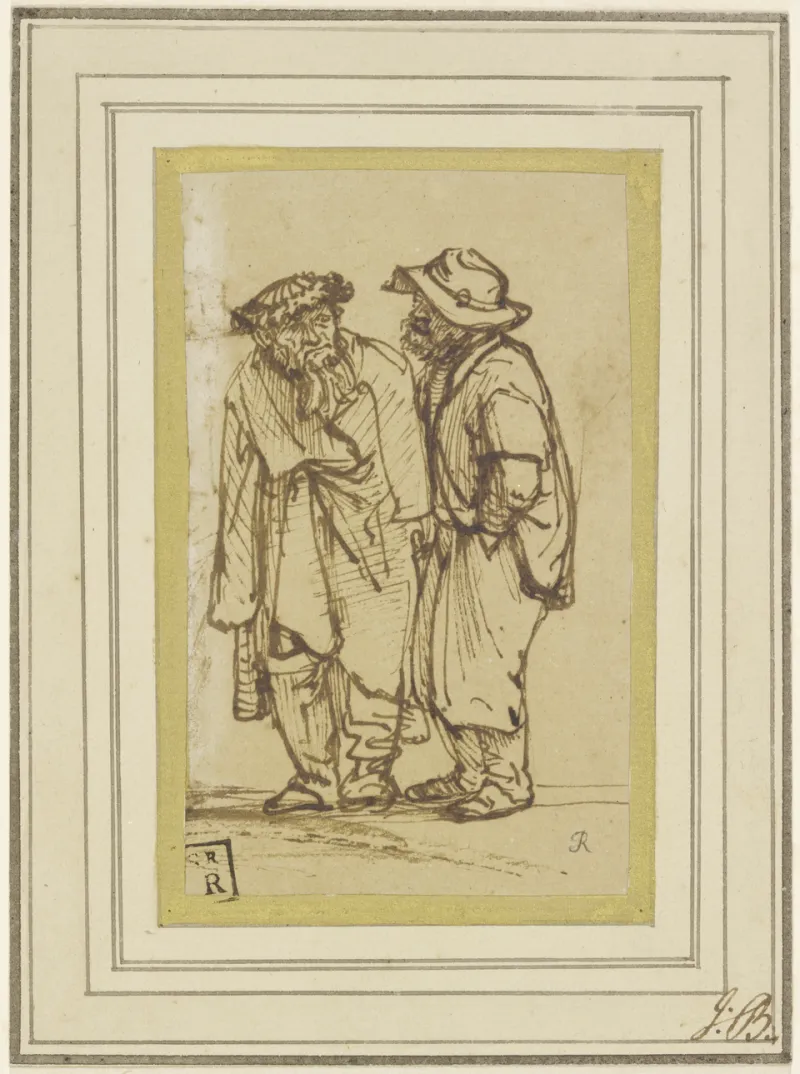
Photo: Rembrandt, PDM-owner, via Wikimedia Commons
Let's start with the symptoms. Persistent fatigue that doesn't respond to better sleep. Brain fog that hangs around no matter how clean you eat. Low-grade anxiety that feels physical rather than psychological. A kind of motivational flatness that the internet has collectively decided must be low testosterone.
Now let's talk about what's actually causing those symptoms for a significant chunk of the men experiencing them.
Loneliness.
Not the poetic, cinematic kind. The mundane, modern American kind — where you have hundreds of social media connections, a decent relationship with your coworkers, and maybe a partner at home, but haven't had a genuinely close friendship in years. The kind where, if something went seriously wrong, you're not sure who you'd call at 11pm.
The Physical Toll of a Shrinking Social World
The research here is not subtle. A landmark meta-analysis published in PLOS Medicine found that social isolation and loneliness were associated with a 26-29% increased risk of mortality — a number comparable to smoking fifteen cigarettes a day. Former U.S. Surgeon General Vivek Murthy called loneliness a public health epidemic. The American Heart Association has published data linking social isolation to significantly elevated cardiovascular risk.
But here's what gets lost in those big-picture statistics: the mechanism isn't mysterious. Social isolation elevates cortisol. Chronic cortisol elevation disrupts sleep architecture, suppresses immune function, promotes inflammatory signaling, and — yes — can meaningfully suppress testosterone production. The fatigue, the brain fog, the low drive — these aren't imaginary. They're real physiological symptoms. They're just being caused by an upstream problem that no supplement addresses.
The supplement industry, to be clear, is not going to tell you this. Neither is the men's health subscription clinic that wants to put you on a monthly protocol. Loneliness doesn't have a SKU.
How Men Got Here
This isn't a new problem, but it's gotten measurably worse. Research from the Survey Center on American Life found that the percentage of men with no close friends has quintupled since 1990 — from 3% to 15%. That's not a rounding error. That's a structural shift in how American men relate to each other.
The causes are genuinely complicated. Male friendships have historically been built around shared activity and proximity — the team, the neighborhood, the job site, the military unit. As those structures have fragmented — longer commutes, remote work, geographic mobility, the suburbanization of daily life — the scaffolding that used to hold male social networks together has quietly collapsed.
At the same time, the cultural script for masculinity hasn't caught up. Asking for connection, admitting loneliness, actively pursuing friendship as an adult — these still carry a residue of stigma for a lot of men that makes the problem self-reinforcing. So instead of addressing it directly, men often address the symptoms. They buy the nootropic. They optimize their sleep stack. They get their blood drawn to find the deficiency.
And the symptoms persist.
Why Apps and Trackers Make It Worse
There's a particular irony in the fact that the loneliness epidemic has coincided with an explosion of health tracking technology. Men who are socially isolated are increasingly turning to apps, wearables, and optimization platforms to manage their health — and in doing so, they're substituting a parasocial relationship with a dashboard for an actual human relationship.
This isn't speculation. Research on social media use and loneliness consistently finds that passive consumption of social content is associated with increased feelings of isolation, not decreased. The same dynamic appears to be emerging in the health-tech space: men who heavily engage with tracking and optimization platforms often report a sense of "doing something" about their health while the actual deficiency — human connection — goes unaddressed.
The tracking app isn't the problem. The problem is when it becomes a substitute for the thing it can't measure.
What Actually Rebuilding Looks Like
Here's where most articles on this topic go wrong: they suggest joining a club, volunteering, or taking a class — advice that is technically correct and practically useless for a 38-year-old guy with a full schedule, a family, and a social anxiety level that makes "just put yourself out there" feel like a joke.
So let's be more specific.
Consistency over intensity. The research on friendship formation consistently points to repeated, unplanned interaction as the primary driver of closeness — not deep conversations or vulnerable disclosures. This means the path back to genuine friendship often runs through regular, low-stakes contact: the same gym at the same time, a standing lunch with a coworker, a weekly pickup game. The depth comes later, if the repetition is there.
Use existing relationships as scaffolding. Most men have dormant friendships — people they were close to at some point who drifted. A direct, no-nonsense message ("Hey, it's been too long. Want to grab a beer?") has a higher conversion rate than most men expect. The other person is usually just as starved for it.
Activity-based connection is the path of least resistance. Men who try to rebuild friendships through conversation-first settings often find it uncomfortable. Men who rebuild through shared activity — a rec league, a home improvement project, a hiking group, a local poker night — find it almost effortless. Work with your wiring, not against it.
Reduce the threshold for what counts as social contact. A ten-minute phone call with an old friend while you're driving home counts. A text thread that actually has some back-and-forth counts. Waiting for the perfect two-hour hangout means waiting indefinitely.
The Supplement Nobody's Selling
There's no product for this. That's partly why it doesn't get the attention it deserves in the men's health space — no one's monetizing it. But the intervention for a meaningful portion of the fatigue, brain fog, low motivation, and vague physical malaise that American men are currently trying to supplement their way out of is genuinely simple to describe, if not always easy to execute.
You need people. Real ones. Who know your name and would notice if you went quiet.
That's not soft. That's biology.