Your Genes Load the Gun. Your Lifestyle Pulls the Trigger. Here's How to Aim.
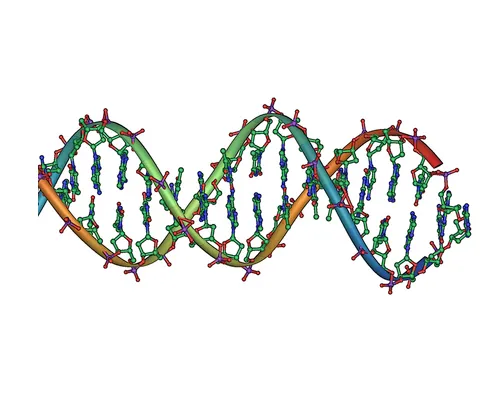
Photo: Jerome Walker, Public domain, via Wikimedia Commons
For a long time, the popular understanding of genetics went something like this: your DNA is a fixed blueprint, you either got lucky or you didn't, and the best you could do was manage the fallout. Heart disease runs in your family? Brace yourself. Your dad went bald at thirty? Start mourning your hairline.
That model wasn't entirely wrong, but it was wildly incomplete. And the field of epigenetics has spent the last two decades filling in the gaps — with findings that are simultaneously more complicated and more hopeful than the old fatalistic story.
What Epigenetics Actually Means (Without the PhD)
Your DNA is the sequence — the four-letter code that spells out every protein your body can make. Epigenetics is the layer on top of that: the system of chemical tags and structural modifications that determine which parts of that code actually get read, and when.
Think of your genome as a massive mixing board with thousands of faders. Epigenetics controls which faders are up and which are down. The underlying tracks don't change, but the output can sound completely different depending on how that board is set.
And here's the critical part: those settings aren't fixed. They respond to your environment, your behavior, your stress levels, what you eat, how much you sleep, and whether you exercise. Chronically. Continuously. Starting right now.
The Grandfather Problem
One of the more mind-bending findings in epigenetics research is that some of these modifications can be passed down across generations — a phenomenon called transgenerational epigenetic inheritance.
Studies in both humans and animal models have found that environmental exposures and lifestyle patterns in one generation can influence gene expression in the next — and sometimes the one after that. Research on populations that experienced famine, chronic stress, or significant dietary shifts has found metabolic and cardiovascular signatures in grandchildren that trace back to conditions their grandparents lived through.
This doesn't mean you're doomed by your family tree. It means the biological story is longer and more interconnected than a simple genetic inheritance model suggests. Your grandfather's diet, stress load, and activity level may have contributed to how certain genes in your body are currently expressed.
Which also means that what you do today is part of a story that extends beyond you.
Metabolism: Where Epigenetics Gets Personal Fast
For most men, metabolism is where this science becomes immediately relevant. Insulin sensitivity, fat storage patterns, and the way your body handles carbohydrates are all influenced by gene expression — and that expression is meaningfully shaped by diet and exercise patterns.
Research has shown that regular aerobic exercise can alter the methylation patterns (one of the key epigenetic mechanisms) of genes associated with fat metabolism and insulin signaling. In plain terms: consistent cardio doesn't just burn calories today. It changes how your cells process energy over time, at a level that goes deeper than simple calorie math.
Similarly, chronic consumption of ultra-processed foods has been associated with epigenetic changes that increase inflammatory gene expression. This isn't a morality lecture about junk food — it's a mechanistic explanation for why dietary patterns have effects that seem disproportionate to their caloric content alone.
Heart Health and the Stress Methylation Connection
Cardiovascular disease is the leading cause of death for American men, and family history is one of the most cited risk factors. But epigenetic research is starting to reveal how much of that "family history" risk is actually mediated by shared lifestyle patterns rather than purely inherited genetic sequences.
Chronic psychological stress has been shown to alter the expression of genes involved in inflammation and vascular function — two major players in cardiovascular disease. Elevated cortisol over time doesn't just feel bad. It's actively modifying the epigenetic landscape of your cardiovascular system.
The flip side is also true. Studies on mindfulness-based stress reduction, regular physical activity, and even strong social connections have shown measurable epigenetic changes in genes associated with inflammation and immune function. The lifestyle interventions that cardiologists have been recommending for decades are working, in part, at an epigenetic level.
Cognitive Decline: The Long Game
Brain health is perhaps where epigenetics research is moving fastest and with the most urgency. Alzheimer's disease and other forms of cognitive decline have complex genetic components, but genome-wide association studies keep finding that genetic risk explains only a fraction of actual incidence.
Epigenetic mechanisms — particularly those influenced by sleep quality, metabolic health, and chronic inflammation — are increasingly implicated in the trajectory of cognitive aging. Men who carry certain genetic variants associated with Alzheimer's risk don't inevitably develop the disease. And men without those variants aren't automatically protected.
What appears to matter enormously is the epigenetic environment those genes are operating in — which is shaped by decades of lifestyle choices.
The Practical Takeaway (Without the Fatalism)
None of this is meant to make you anxious about every meal or obsess over your grandfather's medical history. The point is almost exactly the opposite.
Epigenetics is, at its core, an argument for agency. Your genetic sequence is fixed. But the expression of that sequence is a dynamic, living process that responds to what you do. The habits that move the needle — consistent movement, sleep that actually recovers you, a diet built around whole foods, stress that gets processed rather than accumulated — aren't just good advice. They're inputs into a biological system that is actively rewriting itself based on your choices.
You don't need a $200 genetic test to apply this. You need the same things your grandfather probably should have done more of, and that you can start today.
The code isn't your destiny. The expression is.