Your Shower Already Has the Best Recovery Tool in Men's Wellness — You're Just Not Using It Right
Your Shower Already Has the Best Recovery Tool in Men's Wellness — You're Just Not Using It Right
Somewhere between the ice bath influencers and the guys dunking themselves in frozen lakes for Instagram, a genuinely useful piece of recovery science got buried under a pile of performance theater. Cold water immersion — and its close cousin, contrast therapy — has been studied seriously by sports physiologists for decades. The results are more nuanced than the cult would have you believe, but also more useful than the skeptics admit.
The bottom line before we dive in: you don't need a $3,000 plunge tub, a spa membership, or a subscription to anything. Your bathroom is already equipped.
What's Actually Happening When Cold Water Hits Your Skin
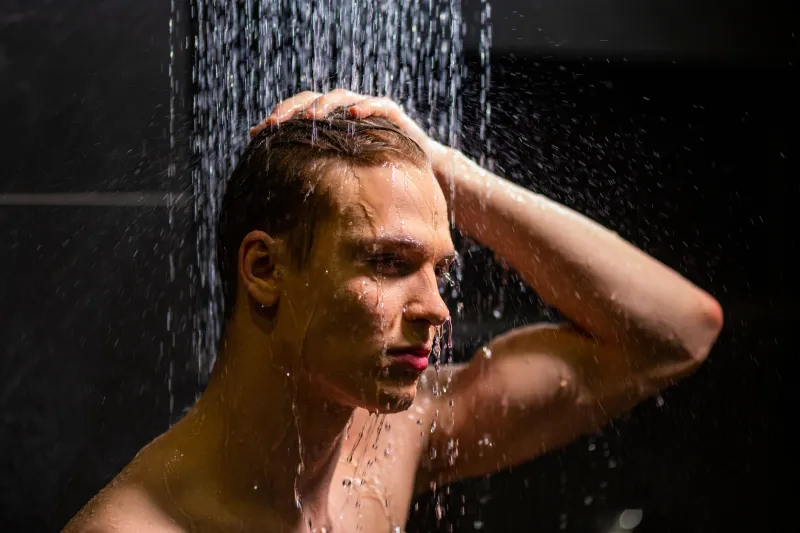
When cold water contacts your body, a cascade of physiological responses fires off almost immediately. Blood vessels near the skin surface constrict — a process called vasoconstriction — pushing blood toward your core organs. Your nervous system interprets this as a mild stressor and responds by releasing norepinephrine, a neurotransmitter tied to alertness, mood regulation, and focus.
A 2022 study published in PLOS ONE found that cold water immersion increased norepinephrine levels by as much as 300 percent. That's not nothing. For context, norepinephrine plays a role in the same pathways targeted by certain antidepressants. Nobody's saying a cold shower replaces mental health treatment — but the underlying mechanism is real and documented.
For muscle recovery specifically, the research points to reduced delayed onset muscle soreness (DOMS) following intense training. A widely cited Cochrane review found that cold water immersion was more effective than passive rest for reducing muscle soreness at 24, 48, and 96 hours post-exercise. The working theory involves reduced inflammation and metabolic waste clearance in muscle tissue.
Where the Hype Outpaces the Evidence
Here's where it's worth being honest. Some of the more dramatic claims circulating in men's wellness spaces don't hold up as cleanly under scrutiny.
Testosterone? The evidence is thin and inconsistent. Some small studies have shown transient hormonal changes following cold exposure, but the effect sizes are modest and the methodology in many of these studies wouldn't survive rigorous peer review. If cold showers reliably boosted testosterone in any meaningful long-term way, we'd have large-scale replication studies by now. We don't.
Fat loss through brown adipose tissue activation is another one that gets oversold. Cold exposure does stimulate brown fat, which burns calories to generate heat. But the quantities involved in a typical shower protocol are unlikely to move the needle on body composition in isolation. It's a real mechanism — just not a magic one.
Immune system supercharging is similarly overstated. The Wim Hof studies that circulate constantly involved a specific breathing protocol alongside cold exposure, making it difficult to isolate cold alone as the variable. The immune effects observed were interesting but not yet replicated at scale.
The Case for Contrast Therapy (And Why It Costs You Nothing)
Contrast therapy — alternating between hot and cold water — may actually outperform straight cold exposure for certain recovery goals. The mechanism involves cycling between vasodilation (hot water expanding blood vessels) and vasoconstriction (cold water narrowing them), essentially creating a pumping effect that may accelerate the clearance of metabolic byproducts from muscle tissue.
Athletes have used this approach for years. Physical therapists recommend it for injury recovery. And your shower handles both temperatures just fine.
A 2013 study in the Journal of Strength and Conditioning Research found that contrast water therapy reduced perceived muscle soreness and improved recovery markers compared to passive rest. The protocol used in research settings typically involves one to three minutes of hot water followed by one minute of cold, repeated three to four times.
A Practical Protocol You Can Start Tonight
Forget the elaborate setups. Here's a framework based on what the research supports, using nothing but a standard shower:
For general recovery and mood: Finish your regular shower with 60 to 90 seconds of the coldest water your tap produces. Work up to it over a week if you need to — start with 15 seconds and add time daily. Consistency matters more than heroics on day one.
For post-workout muscle soreness: Try a basic contrast protocol. Spend two minutes under hot water, then switch to cold for 60 seconds. Repeat this cycle three times, ending on cold. Do this within an hour of intense training for best results.
For morning alertness: A 30-second cold finish at the end of your morning shower is enough to trigger norepinephrine release and sharpen focus. This one has the most subjective but also most consistently reported benefit among regular practitioners.
If you have access to a gym with a hot tub and a cold plunge, the immersion effect is more complete than a shower — but the shower protocol still delivers measurable benefit. Work with what you have.
A Note on Who Should Be Cautious
Cold water therapy is low-risk for healthy men, but a few caveats are worth stating plainly. If you have cardiovascular disease, Raynaud's syndrome, or any condition affecting circulation, talk to a doctor before experimenting with cold exposure. The cardiovascular spike that comes with sudden cold immersion is real — heart rate and blood pressure both jump in the first few seconds. For most men, that's a non-issue. For some, it warrants a conversation first.
Also worth noting: some research suggests that habitual cold water immersion immediately post-workout may blunt certain adaptations to strength training over time by suppressing the inflammatory signals the body uses to build muscle. If hypertrophy is your primary goal, you might save the cold protocol for rest days or non-training mornings rather than immediately after lifting.
The Bigger Picture
Men's wellness has developed a complicated relationship with anything that looks like it might be free. The subscription clinic model depends on the idea that effective health interventions require monthly fees, proprietary formulations, and ongoing clinical relationships. Sometimes that's true. Often it isn't.
Cold water therapy sits firmly in the "often it isn't" category. The physiological benefits around mood, circulation, and muscle recovery are grounded in legitimate research. The protocol requires nothing you don't already own. And the barrier to entry is genuinely just the willingness to turn a knob.
The cold shower cult got a lot wrong. The identity performance, the testosterone mythology, the implication that discomfort alone equals optimization — all of that is noise. But buried underneath the bravado is a tool with real, documented utility for men who train hard, sleep poorly, or just want a sharper start to their morning.
Your bathroom has been waiting. Might as well use it.